
DSTIKE Deauther OLED V8 Kit - 2.4 GHz Wi-Fi Testing Tool
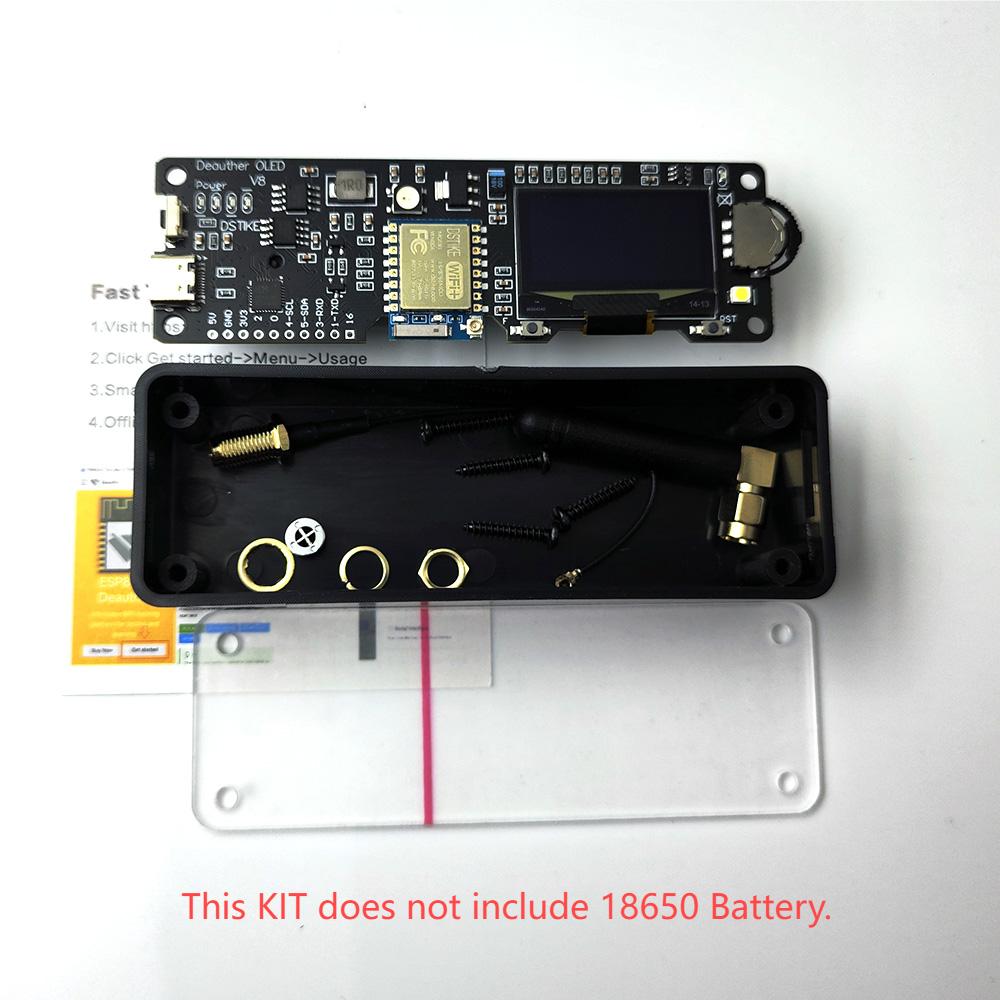
DIY Kit — Unassembled without battery
Sale price
$29.00
Regular price
$39.00
Skip to product information


DSTIKE Deauther OLED V8 Kit - 2.4 GHz Wi-Fi Testing Tool
DSTIKE Deauther OLED V8 Kit
Sale price
$29.00
Regular price
$39.00
Shipping to the US & UK
- YunExpress Standard: $19 USD · 7–14 days
- YunExpress Express: $26 USD · 5–8 days
Estimated transit times after dispatch. Final shipping options and charges are confirmed at checkout.
Normally dispatched daily except Sunday (China time). Announced holiday pauses also apply.
Shipping detailsESP8266 OLED Development Platform with RTC and 18650 Power Management
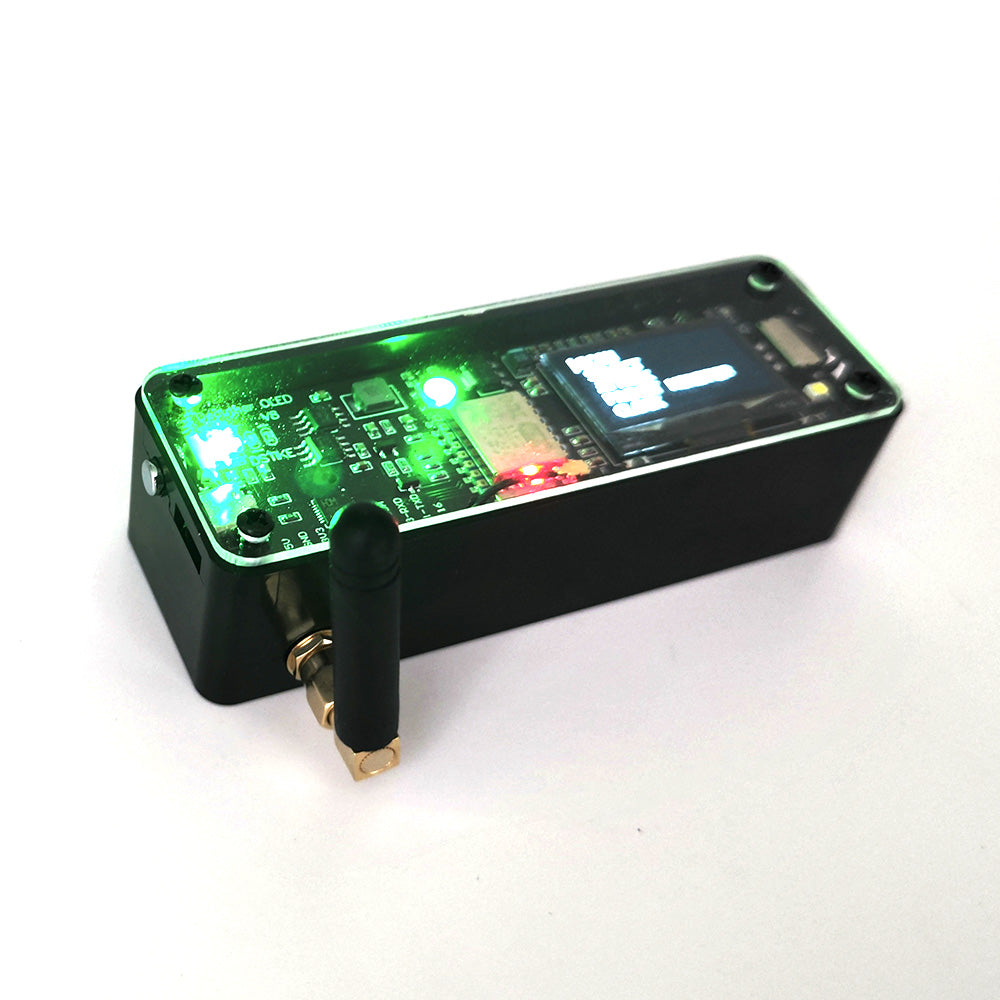
DSTIKE Deauther OLED V8 Kit is a portable ESP8266 development platform designed for wireless education, firmware experimentation, network diagnostics, and authorized 2.4GHz security assessment.
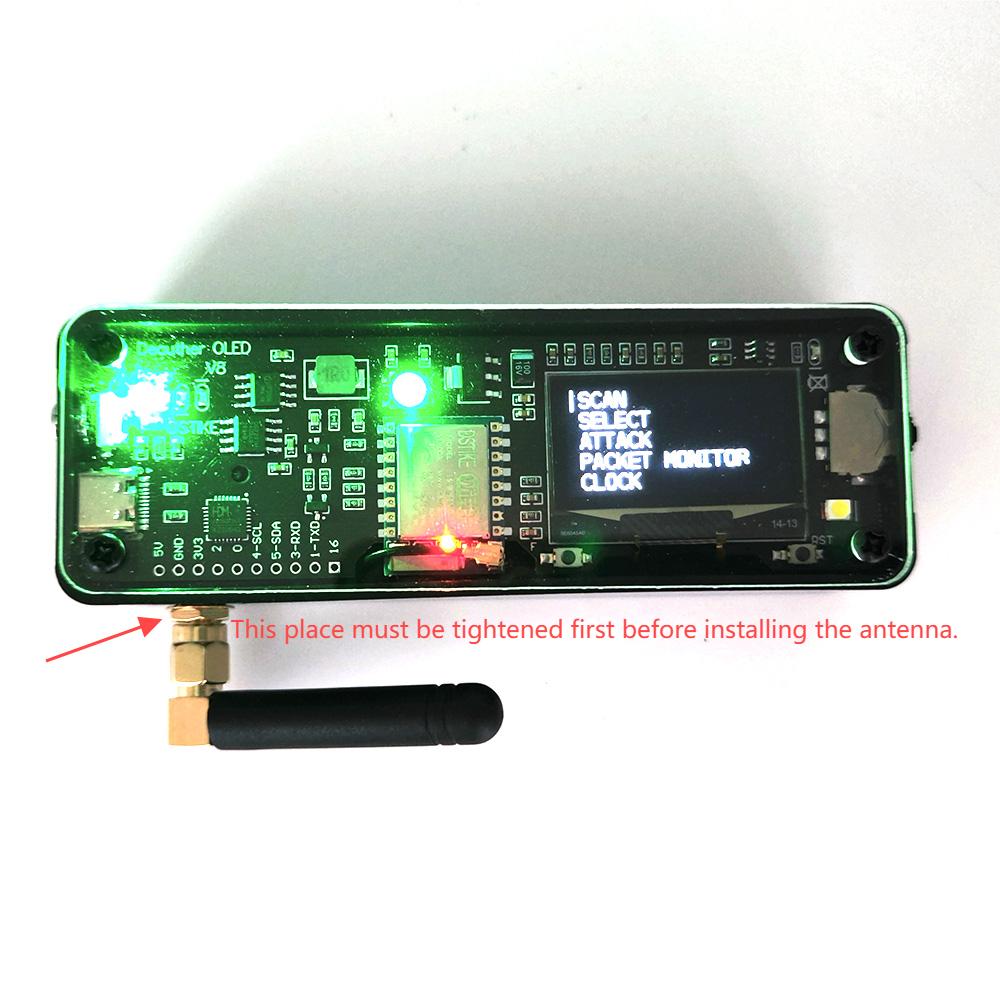
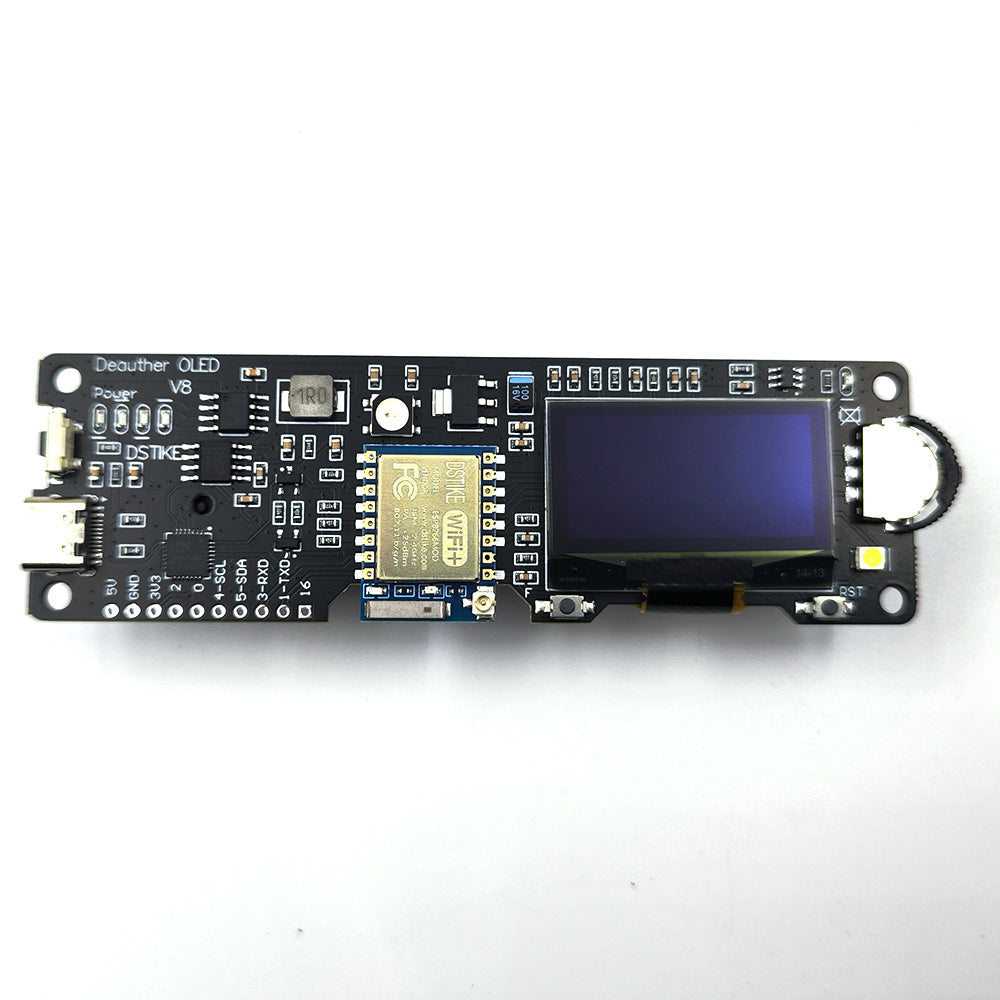
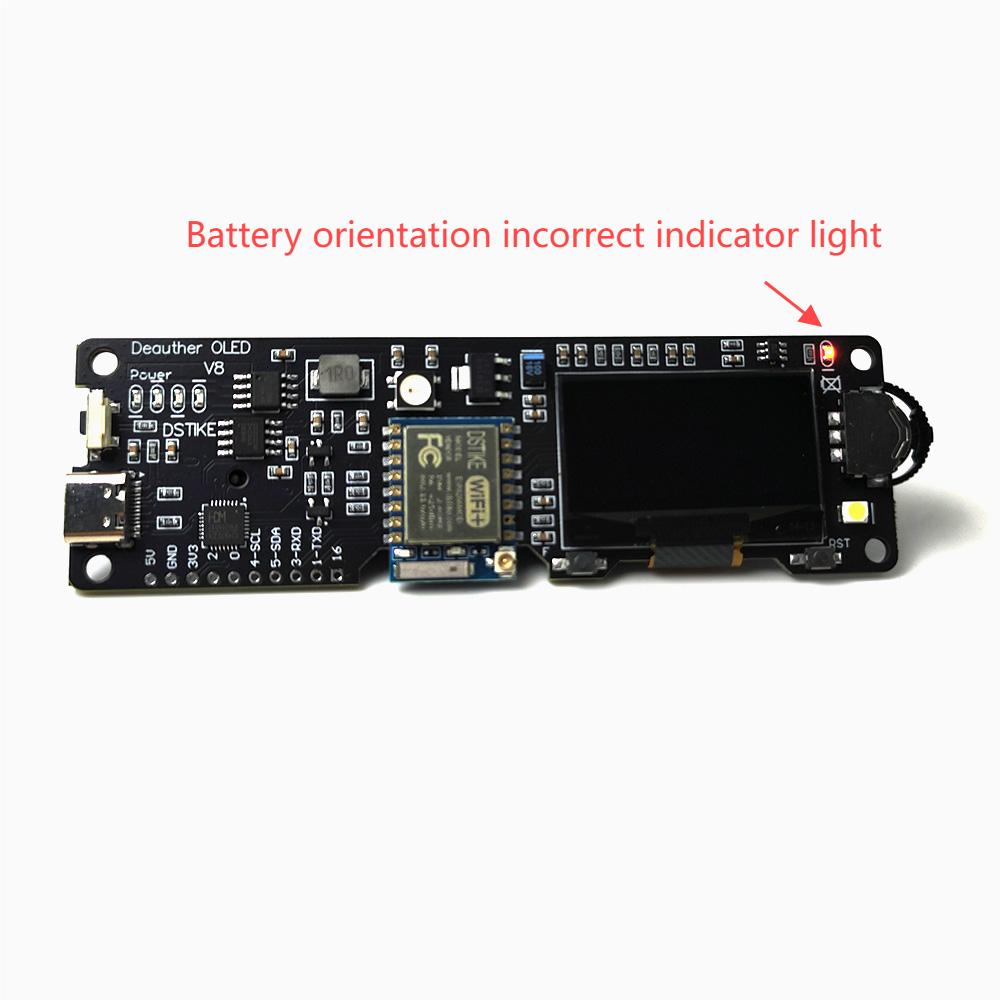
It combines a 1.3-inch OLED display, three-way momentary control switch, DS3231 real-time clock, WS2812B RGB LED, high-brightness LED, integrated 18650 charging, four-level battery indication, external antenna connection, and accessible GPIO breakout pins.
Compatible ESP8266 Deauther firmware is preinstalled, while the board remains fully reprogrammable for custom ESP8266 projects.
What’s New in Version 8?
Compared with OLED V7, the V8 hardware includes:
-
Upgraded battery-protection chip
-
Revised power and supporting circuits
-
Improved operational stability
-
Updated battery-protection design
These changes focus on more reliable battery-powered operation while retaining the OLED, RTC, control switch, LEDs, and GPIO expansion features of the earlier design.
Supported Learning and Assessment Functions
Available functions depend on the installed firmware version.
2.4GHz Wi-Fi Scanning
Scan nearby compatible 2.4GHz Wi-Fi signals and review information such as network identifiers, channels, and signal activity.
Packet Monitoring
Observe selected packet and channel activity to better understand the behavior of a nearby 2.4GHz wireless environment.
Management-Frame Resilience Testing
Evaluate how equipment on an authorized test network responds to selected 802.11 management frames.
This can help network owners identify older equipment that may not support modern management-frame protection.
Beacon and Probe-Frame Demonstrations
Explore how beacon and probe frames are used during Wi-Fi discovery and connection processes in a controlled laboratory environment.
Adjustable Real-Time Clock
The integrated DS3231 RTC supports clock display and time adjustment in compatible firmware.
These functions do not reveal Wi-Fi passwords, decrypt protected traffic, provide access to secured networks, or bypass Protected Management Frames.
1.3-Inch OLED and Physical Controls
The SH1106 OLED provides a clear standalone interface for:
-
Firmware menus
-
Wireless scan information
-
Packet-monitor status
-
Clock display
-
Battery and operating information
-
Custom ESP8266 applications
The three-way momentary control switch provides Up, Down, and Select input without requiring a separate phone for basic menu navigation.
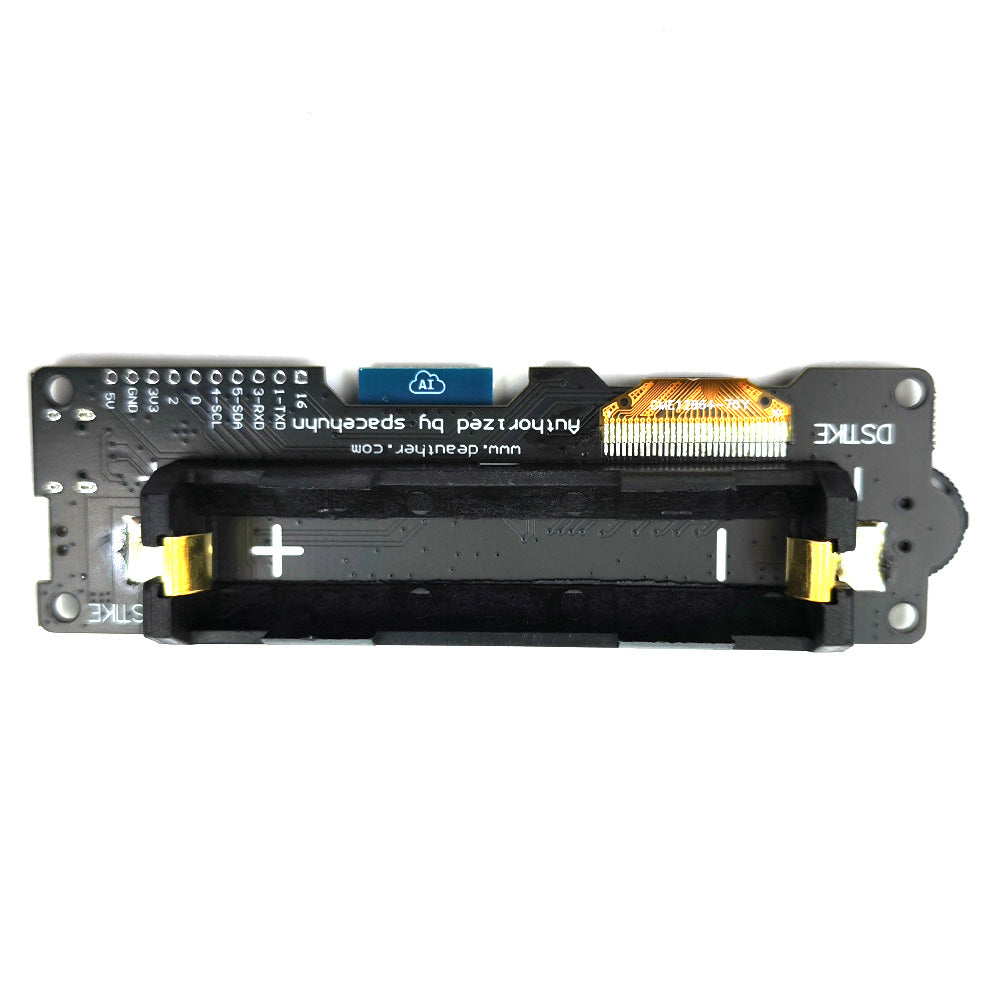
Integrated 18650 Power System
OLED V8 includes an onboard 18650 charging and power-management system designed for portable operation.
Power features include:
-
Charging current up to approximately 1A
-
Four LEDs for approximate battery-level indication
-
Single press to turn the device on
-
Double press to turn the device off
-
Upgraded V8 battery-protection circuit
-
Protection design covering short circuit, overcharge, over-discharge, temperature, and reverse-polarity conditions
Battery-protection functions reduce risk but do not replace correct battery handling.
Always verify battery polarity, condition, dimensions, and compatibility before installation. Never use a damaged, swollen, leaking, or unknown-quality 18650 cell.
Battery Runtime
Typical board consumption is approximately 80–100mA, depending on display activity, wireless operation, LEDs, firmware, and connected peripherals.
With a genuine 3500mAh 18650 cell, runtime may reach approximately 35 hours under favorable conditions.
Actual battery life can vary significantly according to:
-
Real battery capacity
-
Battery age and condition
-
Wireless activity
-
OLED brightness
-
RGB and high-brightness LED use
-
Connected GPIO peripherals
-
Temperature
-
Firmware configuration
-
Power-conversion losses
The runtime figure is an estimate and is not guaranteed.
DS3231 Real-Time Clock
The integrated DS3231 provides timekeeping for compatible firmware and custom applications.
A connected 18650 battery is required if the clock must continue operating or retain time when external USB power is removed.
The RTC can also be used in custom projects involving:
-
Scheduled status displays
-
Data-logging timestamps
-
Timed sensor readings
-
Portable clocks
-
Time-based automation
-
Laboratory equipment timers
RGB and High-Brightness LEDs
OLED V8 includes two programmable lighting components:
-
WS2812B RGB LED: GPIO 15
-
High-brightness LED: GPIO 16
The RGB LED can display programmable colors and status information. The high-brightness LED can be controlled through compatible firmware or custom code.
GPIO Expansion
Seven GPIO signals and power connections are available for development and expansion.
Breakout connections include:
-
GPIO 16
-
GPIO 3 / RXD
-
GPIO 1 / TXD
-
GPIO 5 / SDA
-
GPIO 4 / SCL
-
GPIO 0
-
GPIO 2
-
3.3V
-
5V
-
GND
These connections support compatible sensors, serial devices, LEDs, buttons, and other experimental hardware.
Always check ESP8266 boot-pin requirements and voltage limits before connecting peripherals. ESP8266 GPIO pins are 3.3V logic and are not generally 5V tolerant.
GPIO Reference
-
OLED SDA: GPIO 5 / D1
-
OLED SCL/SCK: GPIO 4 / D2
-
WS2812B RGB LED: GPIO 15 / D8
-
Up input: GPIO 12
-
Down input: GPIO 13
-
Select input: GPIO 14
-
High-brightness LED: GPIO 16
-
RTC: DS3231
Open-Source Firmware Ecosystem
OLED V8 was designed for the open-source SpacehuhnTech ESP8266 Deauther project.
The project’s supported-device documentation lists DSTIKE OLED boards as purpose-built ESP8266 development hardware with an OLED display, external antenna support, and an 18650 battery connection.
Developers can replace the preinstalled firmware and use OLED V8 for custom projects such as:
-
Portable Wi-Fi signal monitors
-
Battery-powered sensor displays
-
DS3231 clock projects
-
OLED menu systems
-
Environmental monitors
-
RGB status indicators
-
Serial debugging tools
-
Arduino and ESP8266 programming exercises
Installing custom firmware will overwrite the preinstalled software. Back up important settings before flashing.
Key Features
-
ESP8266 development platform
-
2.4GHz Wi-Fi support
-
1.3-inch SH1106 OLED
-
Three-way momentary control switch
-
DS3231 real-time clock
-
WS2812B RGB LED
-
GPIO16 high-brightness LED
-
Integrated 18650 charging
-
Charging current up to approximately 1A
-
Four-level battery indication
-
Button-based electronic power control
-
External antenna connector
-
Seven GPIO breakout signals
-
3.3V and 5V power breakouts
-
Compatible firmware preinstalled
-
Reprogrammable with ESP8266 development tools
Available Options
DIY Kit — Unassembled, No Battery
This option is supplied unassembled and does not include an 18650 battery.
It is recommended for makers who:
-
Prefer to complete the mechanical assembly themselves
-
Already have a compatible 18650 cell
-
Want easier access to the board during development
-
Plan to customize the enclosure or hardware
Confirm all connections, polarity, clearances, and fasteners before applying power.
Assembled — Battery Included
This option is supplied assembled with a compatible battery.
It is recommended for customers who want a ready-assembled device without sourcing and installing a separate cell.
Battery availability may be affected by destination-specific shipping regulations. Battery capacity, brand, appearance, and labeling may vary between production or shipping batches.
Which DSTIKE Product Should You Choose?
Choose OLED V8 Kit if you want:
-
An ESP8266 board with an OLED interface
-
Replaceable 18650 battery support
-
Long portable operating time
-
An integrated DS3231 RTC
-
GPIO breakout connections
-
A choice between DIY and assembled versions
-
A platform for custom electronics development
Consider Deauther MiNi V4 if you prefer:
-
A smaller and more affordable ESP8266 board
-
A compact LiPo-powered design
-
Simple three-button control
-
A pocket-sized enclosure option
Consider Deauther32 Watch MINI if you need:
-
A fully assembled wearable design
-
A color display
-
A newer ESP32-C5 processor
-
Both 2.4GHz and compatible 5GHz development
Important Frequency Notice
OLED V8 supports 2.4GHz Wi-Fi only.
It does not support:
-
5GHz Wi-Fi
-
6GHz Wi-Fi
-
Wi-Fi 6E
-
5G cellular networks
-
SIM cards or mobile data
Choose an ESP32-C5-based DSTIKE product if your project requires compatible 5GHz functionality.
PMF and Network Compatibility
Controlled management-frame testing results depend on the selected channel, access point, client hardware, regional settings, firmware version, and network-security configuration.
Networks using Protected Management Frames—including IEEE 802.11w, PMF Capable, or PMF Required—may limit or prevent certain assessment functions.
OLED V8 does not bypass PMF or other Wi-Fi security protections.
Firmware Notice
Because the device uses an open-source firmware ecosystem:
-
Menus and functions may vary between versions
-
Experimental releases may contain bugs
-
Custom firmware can overwrite the original installation
-
Web-interface availability can be affected by channel changes and wireless congestion
-
Some functions may not work with modern protected equipment
-
Incorrect flashing settings may prevent the board from starting normally
Use firmware and board configurations intended for the correct DSTIKE OLED hardware version.
Responsible Use and Legal Notice
DSTIKE Deauther OLED V8 Kit is intended for wireless education, open-source development, network diagnostics, research, and authorized security testing.
Use the device only with networks and equipment that you own or for which you have received explicit permission to test.
Interfering with third-party wireless communications or collecting data without authorization may violate local laws and regulations. The user is responsible for understanding and complying with all applicable requirements.
DSTIKE does not authorize or encourage unauthorized network disruption, interception, or access.