


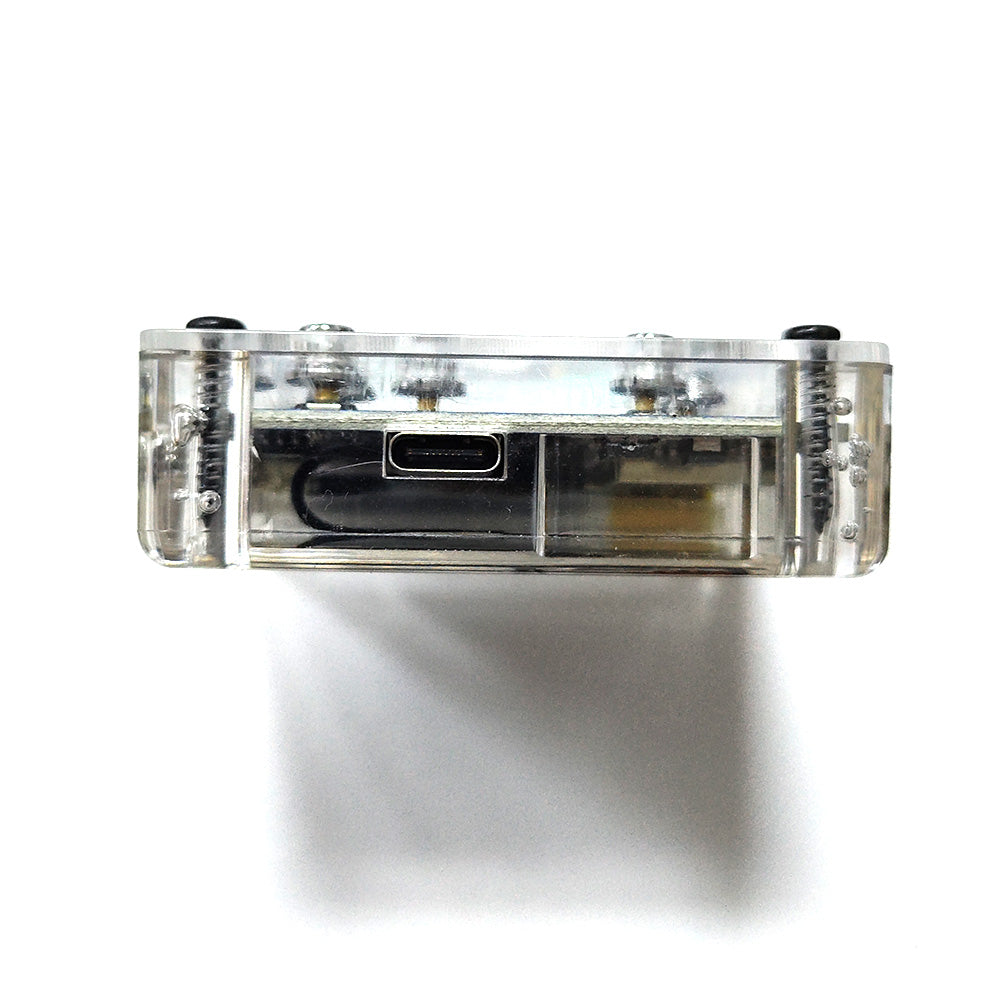

DSTIKE ESP32-S3 Handheld Game Console
Tracked worldwide shipping
Ships daily except Saturday
Estimated delivery 7–14 days
Programmable ESP32-S3 Handheld Console for Games and Maker Projects
The DSTIKE ESP32-S3 Handheld Game Console is a compact, open-source development platform designed for creating and playing simple handheld games.
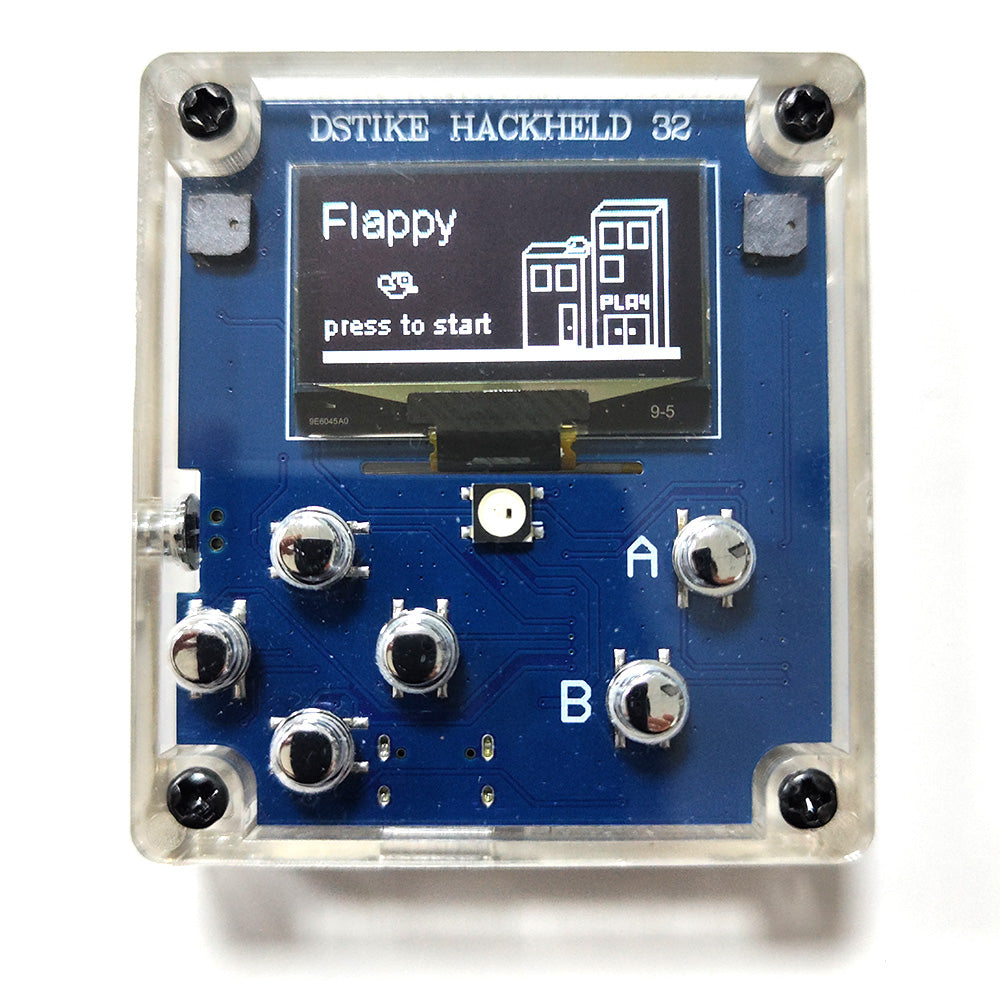
Powered by an ESP32-S3 N16R8 module with 16MB flash and 8MB PSRAM, it combines a 1.3-inch OLED display, six game controls, two buzzers, a programmable RGB LED, USB-C connectivity and a rechargeable battery in a transparent handheld enclosure.
A Flappy Bird demo is preinstalled, so the console is ready to play after charging. Developers can replace the included game with their own programs, graphics, menus and interactive projects.
Key Features
-
ESP32-S3 N16R8 development platform
-
16MB flash memory
-
8MB OPI PSRAM
-
1.3-inch SH1106 OLED display
-
Six physical controls: Up, Down, Left, Right, A and B
-
Two onboard buzzers for game sound effects
-
Programmable WS2812B RGB LED
-
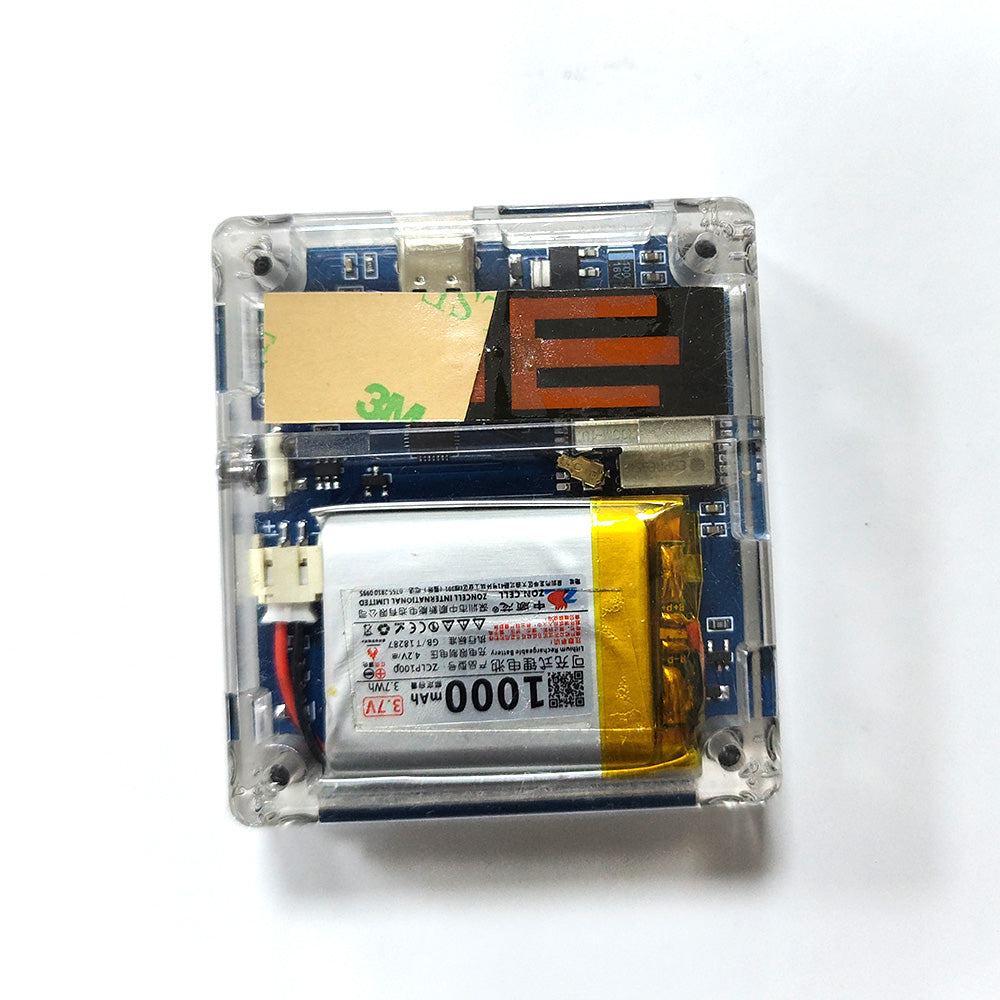
Built-in 1000mAh rechargeable battery
-
USB-C charging and programming
-
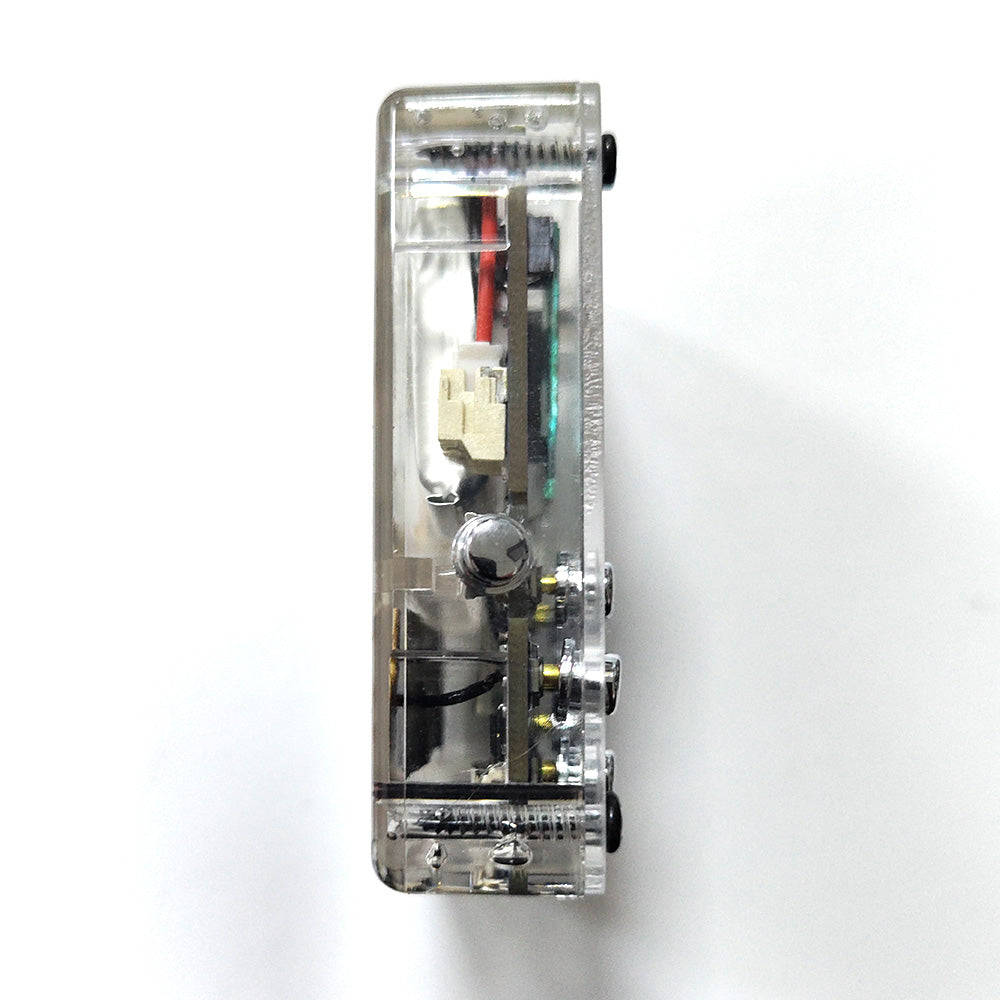
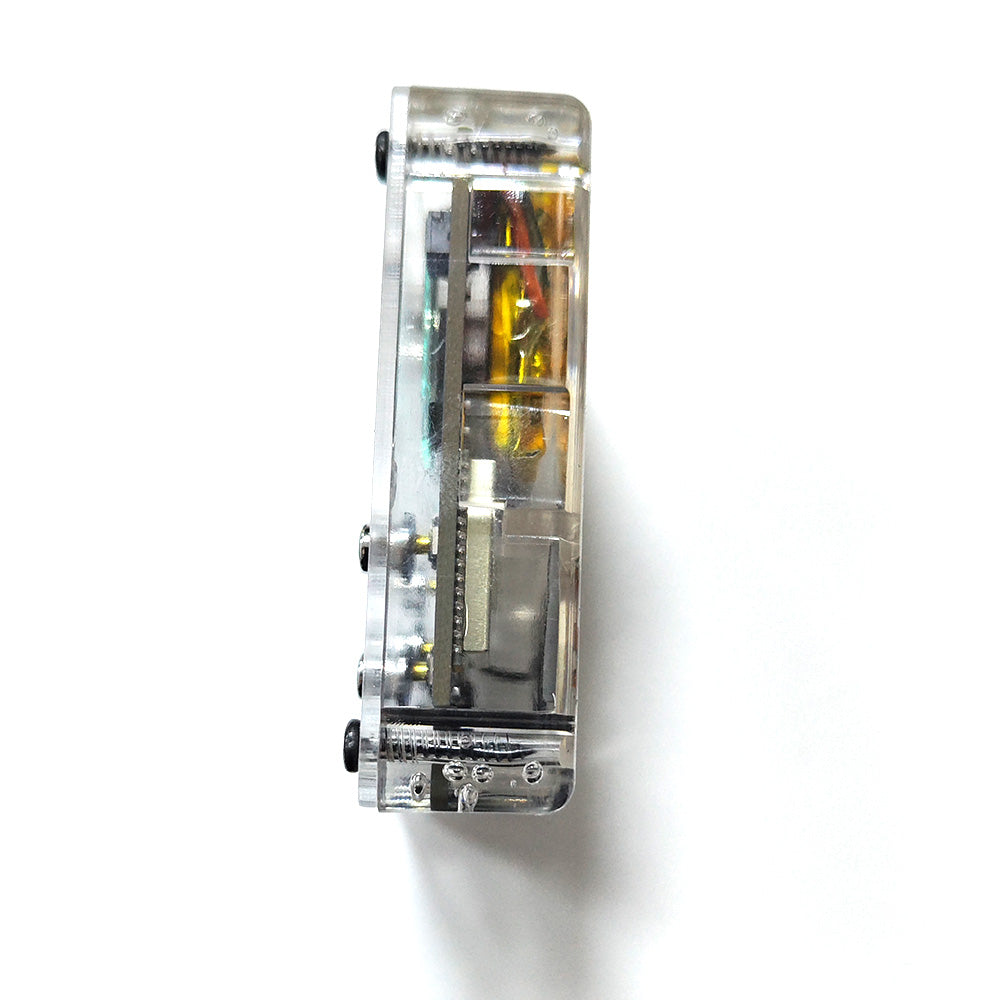
Transparent enclosure
-
Flappy Bird demo preinstalled
-
Open-source example code
-
Compatible with Arduino development tools
Ready to Play, Open to Develop
The preinstalled Flappy Bird game demonstrates the console’s display, controls, sound and graphics capabilities.
It can also be used as a starting point for creating:
-
Arcade-style mini games
-
Menu-driven applications
-
Reaction and timing games
-
Educational programming exercises
-
Portable counters and controllers
-
Animated OLED projects
-
Wireless ESP32 experiments
-
Custom interfaces for sensors and IoT projects
This is a programmable ESP32-S3 platform rather than a commercial multi-game emulator. Additional games and applications must be programmed or installed by the user.
Physical Game Controls
The console includes six responsive buttons arranged as a traditional handheld interface:
-
Up
-
Down
-
Left
-
Right
-
A
-
B
The controls can be read directly from your program, making the board suitable for games, menus and interactive projects without requiring external buttons.
OLED Display
The 1.3-inch SH1106 monochrome OLED provides a compact standalone interface for:
-
Game graphics
-
Scores and status information
-
Menus
-
Text and icons
-
Sensor readings
-
Debug information
-
Custom animations
The display communicates through I²C and can be controlled using compatible ESP32 Arduino libraries.
Sound and RGB Feedback
Two onboard buzzers provide simple sound effects and audible feedback for games and applications.
A programmable WS2812B RGB LED can be used for:
-
Game status
-
Notifications
-
Charging or operating indicators
-
Score feedback
-
Custom lighting effects
-
Debugging information
Sound and lighting behavior can be fully changed in your own firmware.
Rechargeable Portable Design
A built-in 1000mAh rechargeable battery allows the console to operate without a permanent USB connection.
The USB-C port supports:
-
Battery charging
-
Firmware uploading
-
Serial communication
-
Development and debugging
Press and hold the power switch for approximately 1.5 seconds to turn the console on or off.
During charging, the indicator LED is red. When charging is complete, the indicator next to the power switch changes to green.
Actual operating time depends on display activity, buzzer use, RGB brightness, wireless functions and software configuration.
Hardware Specifications
-
Main controller: ESP32-S3 N16R8
-
CPU: Dual-core Xtensa LX7, up to 240MHz
-
Flash memory: 16MB
-
PSRAM: 8MB OPI PSRAM
-
Display: 1.3-inch SH1106 OLED
-
Controls: Six game buttons
-
Audio: Two onboard buzzers
-
Status lighting: WS2812B addressable RGB LED
-
Battery: Built-in 1000mAh rechargeable lithium battery
-
USB connection: USB-C
-
Enclosure: Transparent case
-
Preinstalled software: Flappy Bird demo
-
Development support: Arduino-compatible ESP32-S3 platform
GPIO Reference
-
Up button: GPIO 38
-
Down button: GPIO 35
-
Left button: GPIO 36
-
Right button: GPIO 37
-
A button: GPIO 19
-
B button: GPIO 20
-
Buzzer 1: GPIO 5
-
Buzzer 2: GPIO 40
-
WS2812B RGB LED: GPIO 1
-
OLED SDA: GPIO 41
-
OLED SCL: GPIO 42
Review the ESP32-S3 pin requirements and 3.3V logic levels before modifying the hardware or connecting additional components.
Recommended Arduino IDE Settings
-
Board: ESP32S3 Dev Module
-
CPU frequency: 240MHz
-
Flash mode: QIO 120MHz
-
Flash size: 16MB
-
PSRAM: OPI PSRAM
-
Partition scheme: 16M Flash (3MB APP / 9.9MB FATFS)
-
Upload mode: UART0 / Hardware CDC
-
Upload speed: 921600
-
USB mode: Hardware CDC and JTAG
-
USB CDC on boot: Disabled
-
Arduino runs on: Core 1
-
Events run on: Core 0
-
Core debug level: None
Settings may need to be adjusted when using a different ESP32 Arduino core version or a custom partition layout.
Open-Source Game Code
The source code for the included Flappy Bird demo is available here:
Download the Flappy Bird source code
You can study the example, change the graphics and controls, add new game mechanics or use it as the foundation for a completely different application.
Uploading new firmware will overwrite the preinstalled game. Save a copy of the original files before flashing custom software.
Package Contents
-
1 × DSTIKE ESP32-S3 Handheld Game Console
-
1 × Built-in 1000mAh rechargeable battery
-
1 × USB-C cable
-
1 × Preinstalled Flappy Bird demo
Battery and Usage Notes
-
Charge the battery before first use.
-
Use a stable 5V USB power source.
-
Do not charge the console unattended.
-
Keep the device away from water, conductive objects and high temperatures.
-
Stop using it if the battery becomes swollen, damaged or unusually hot.
-
The transparent enclosure protects the main circuit, but the product should still be handled as development hardware.
-
Custom firmware and hardware modifications are performed at the user’s own risk.
Built for Learning and Experimentation
The DSTIKE ESP32-S3 Handheld Game Console is suitable for makers, students and developers who want a portable platform for learning ESP32 programming, experimenting with game design or building compact interactive projects.
Play the included demo, study the open-source code or turn the hardware into something entirely your own.