
DSTIKE WiFi Duck - Wi-Fi-Controlled USB Keyboard Automation Tool
$29.00
Skip to product information


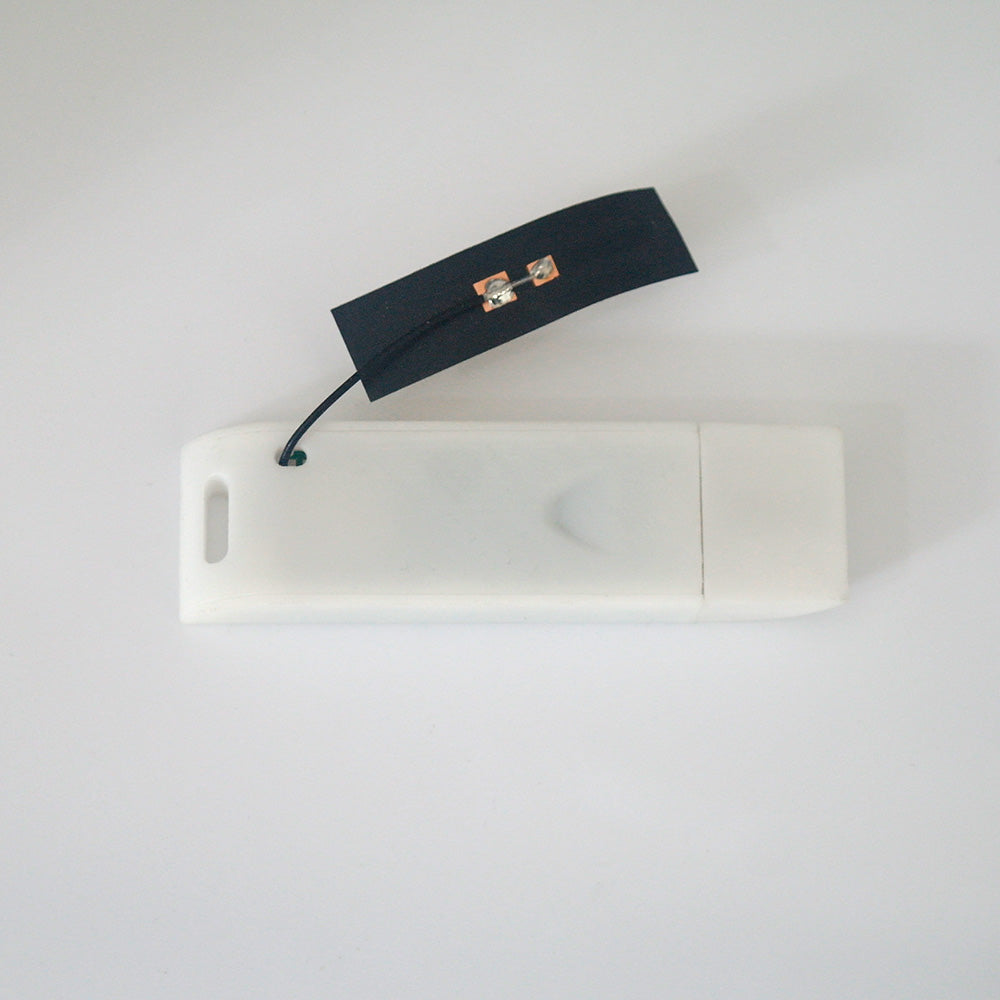
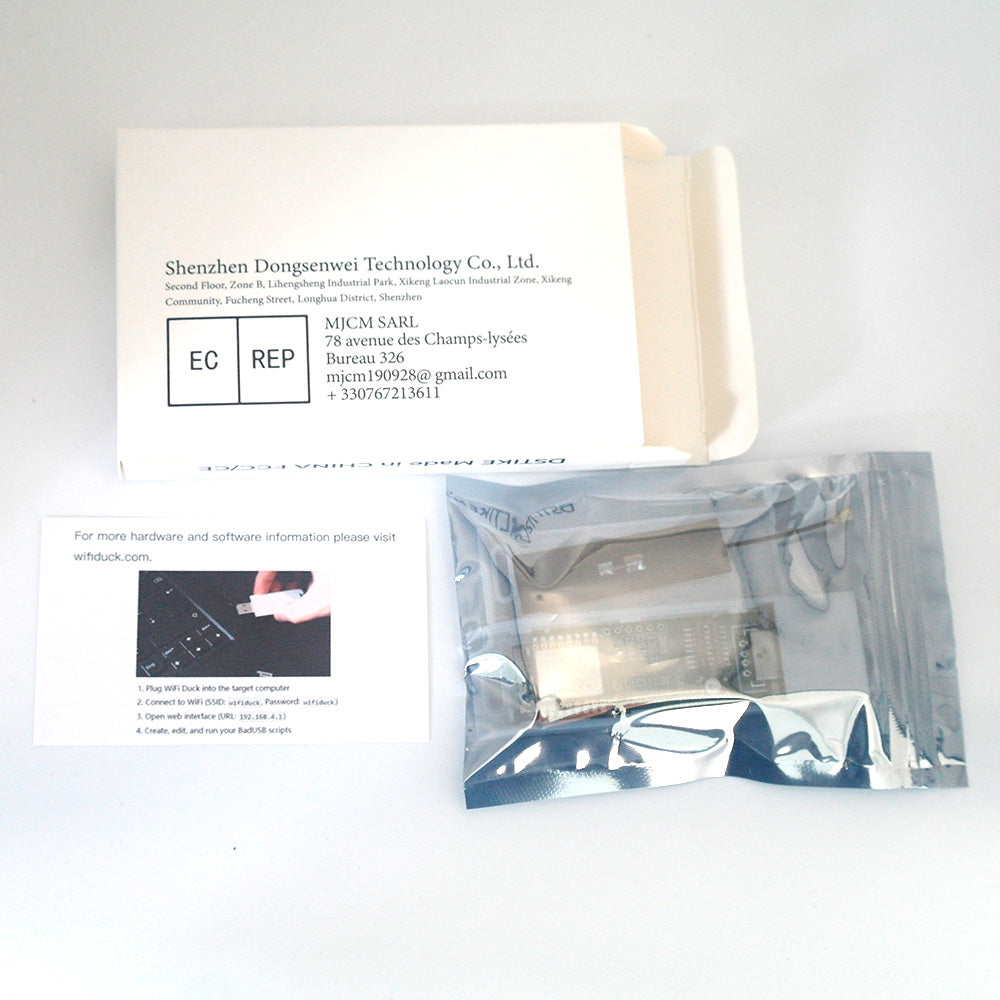
DSTIKE WiFi Duck - Wi-Fi-Controlled USB Keyboard Automation Tool
DSTIKE WiFi Duck
$29.00
Shipping to the US & UK
- YunExpress Standard: $19 USD · 7–14 days
- YunExpress Express: $26 USD · 5–8 days
Estimated transit times after dispatch. Final shipping options and charges are confirmed at checkout.
Normally dispatched daily except Sunday (China time). Announced holiday pauses also apply.
Shipping details
Open-Source Wireless USB HID Automation Platform
DSTIKE WiFi Duck is an open-source USB HID development platform designed for automation, programming education, device testing, and authorized security research.
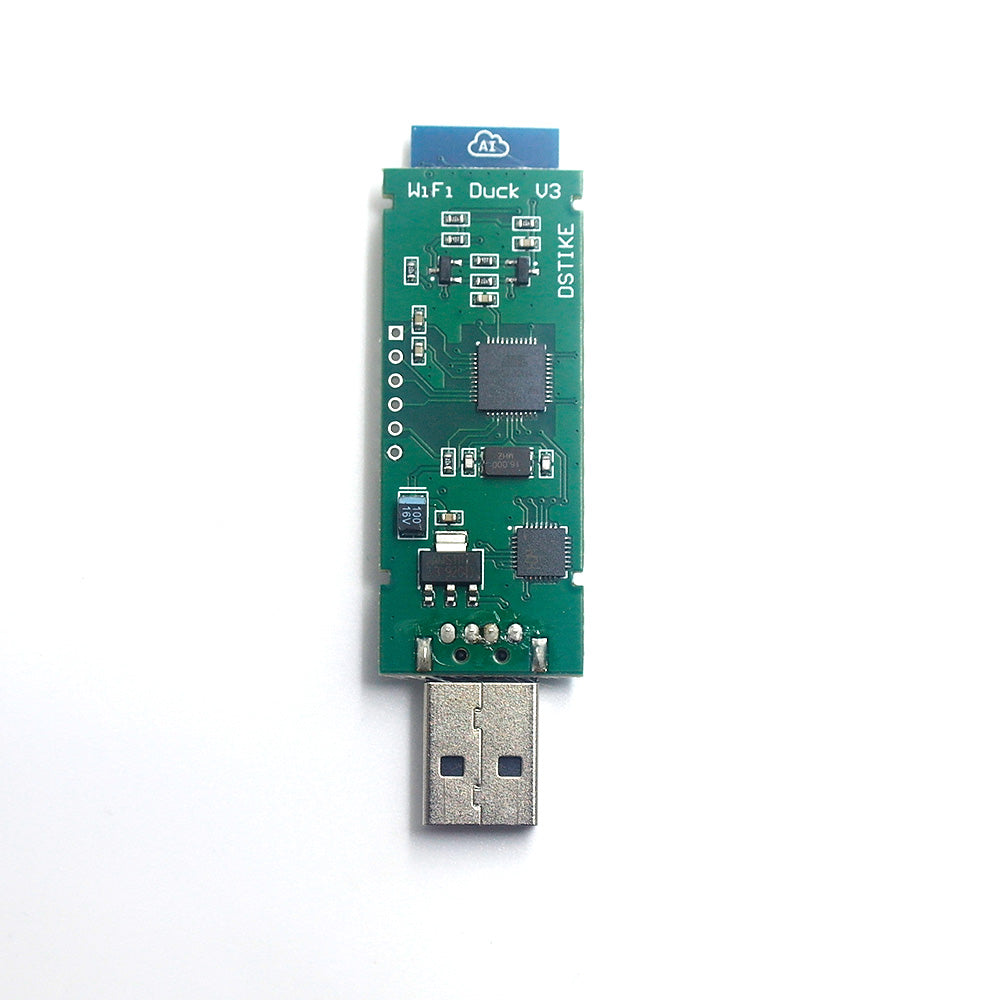
It combines an ATmega32U4 and an ESP8266 in one compact device. The ATmega32U4 provides standard USB keyboard functionality, while the ESP8266 hosts a local Wi-Fi interface for creating, editing, storing, and managing compatible automation scripts.
Unlike script devices that require files to be compiled and copied to a microSD card, WiFi Duck allows supported scripts to be managed through a browser-based local interface.
What Is WiFi Duck?
When connected to a compatible computer, the ATmega32U4 can be recognized as a standard USB HID keyboard. The ESP8266 provides a local 2.4GHz Wi-Fi connection and web interface for managing authorized keyboard-automation sequences.
This makes WiFi Duck useful for:
-
Learning how USB HID devices communicate with computers
-
Creating repetitive keyboard-automation workflows
-
Testing kiosk, terminal, and workstation configurations
-
Demonstrating USB device trust models
-
Developing custom ATmega32U4 and ESP8266 firmware
-
Conducting controlled security training on authorized systems
-
Testing defensive policies for unknown USB devices
WiFi Duck does not independently bypass passwords, unlock protected computers, decrypt data, or disable endpoint-security software.
Dual-Microcontroller Design
ATmega32U4
The ATmega32U4 handles the USB HID interface and can operate as a programmable keyboard on compatible systems.
It can also be reprogrammed through supported Arduino development tools for custom USB and embedded applications.
ESP8266
The ESP8266 provides:
-
A local 2.4GHz Wi-Fi interface
-
Browser-based script management
-
Internal script storage
-
Firmware-management capabilities
-
Communication with the ATmega32U4
The two processors can be accessed independently through the onboard DIP switch when firmware development or recovery is required.
Browser-Based Script Management
Compatible scripts can be managed through the WiFi Duck local web interface.
Depending on the installed firmware, users can:
-
Create new scripts
-
Edit existing scripts
-
Save scripts to internal storage
-
Organize authorized test sequences
-
Start supported automation workflows
-
Review device and connection status
A microSD card is not required.
The interface is hosted locally by the ESP8266. It is not a cloud service and does not require a subscription.
Ducky Script-Style Syntax
WiFi Duck supports a Ducky Script-style command syntax designed to make keyboard automation easier to read and edit.
This can be used in authorized environments for tasks such as:
-
Entering standardized test data
-
Repeating keyboard sequences during software QA
-
Demonstrating operating-system keyboard shortcuts
-
Testing USB-device control policies
-
Automating configuration steps in an isolated laboratory
-
Teaching students about HID behavior and endpoint security
Syntax and command compatibility may vary between firmware versions. Scripts written for other products may require editing before they work correctly on WiFi Duck.
WiFi Duck is an independent open-source project and is not presented as a Hak5 product.
Open-Source and Developer Friendly
WiFi Duck is based on the open-source SpacehuhnTech WiFi Duck project.
The DSTIKE hardware is a custom-designed development board created by Travis Lin and is listed in the official WiFi Duck project documentation.
Developers can:
-
Modify the WiFi Duck firmware
-
Update the ESP8266 over the air when supported
-
Flash the ESP8266 manually
-
Reprogram the ATmega32U4
-
Develop custom USB HID applications
-
Create new local web-interface functions
-
Use the hardware for compatible dual-microcontroller projects
The official project documentation is available at wifiduck.com.
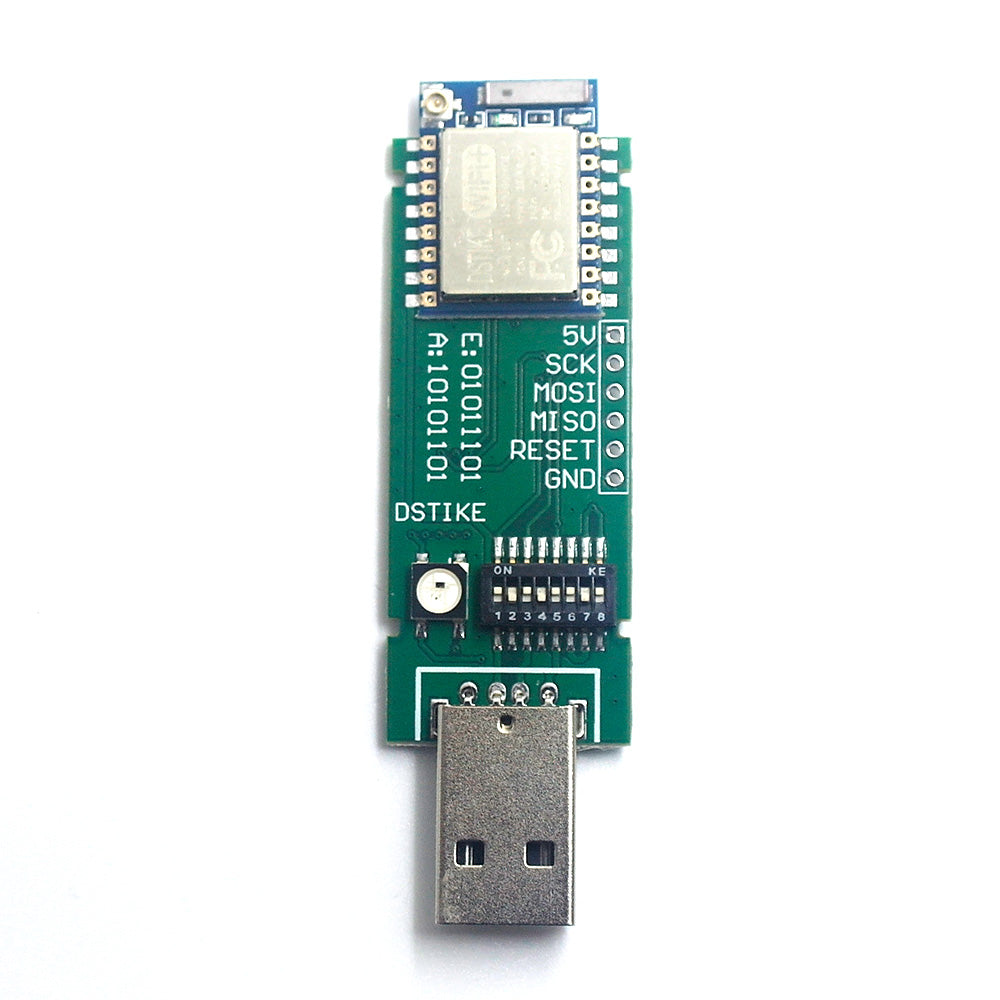
8-Position DIP Switch
The onboard DIP switch allows the ATmega32U4 and ESP8266 to be accessed in different operating or programming modes.
Default Operating Mode
-
ATmega32U4: Connected to USB
-
ESP8266: Powered and active
-
DIP-switch pattern:
10101101
ATmega32U4 Flash Mode
-
ATmega32U4: Connected for programming
-
ESP8266: Disconnected
-
DIP-switch pattern:
10101010
ESP8266 Flash Mode
-
ATmega32U4: Disconnected from USB
-
ESP8266: Connected for programming
-
DIP-switch pattern:
01011101
Always follow the switch numbering and orientation printed on the PCB. Disconnect the device from USB before changing modes.
Incorrect switch settings may prevent normal communication between the two processors but do not necessarily indicate a hardware fault.
RGB Status Indicator
The onboard RGB LED provides basic status information:
-
Green: Device is ready for normal operation
-
Blue: Internal connection or communication problem
Additional colors or behaviors may depend on the installed firmware version.
If the blue indicator appears, first confirm that the DIP switch is set to Default Operating Mode. Firmware mismatch between the ESP8266 and ATmega32U4 can also cause an internal connection warning.
Key Features
-
Dual-processor ATmega32U4 and ESP8266 architecture
-
Standard USB HID keyboard functionality
-
Local 2.4GHz Wi-Fi management interface
-
Create, edit, save, and manage supported scripts in a browser
-
No script compilation required for normal use
-
No microSD card required
-
Ducky Script-style automation syntax
-
8-position DIP switch for operating and programming modes
-
Reprogrammable ATmega32U4
-
ESP8266 manual and supported OTA firmware updating
-
RGB status indicator
-
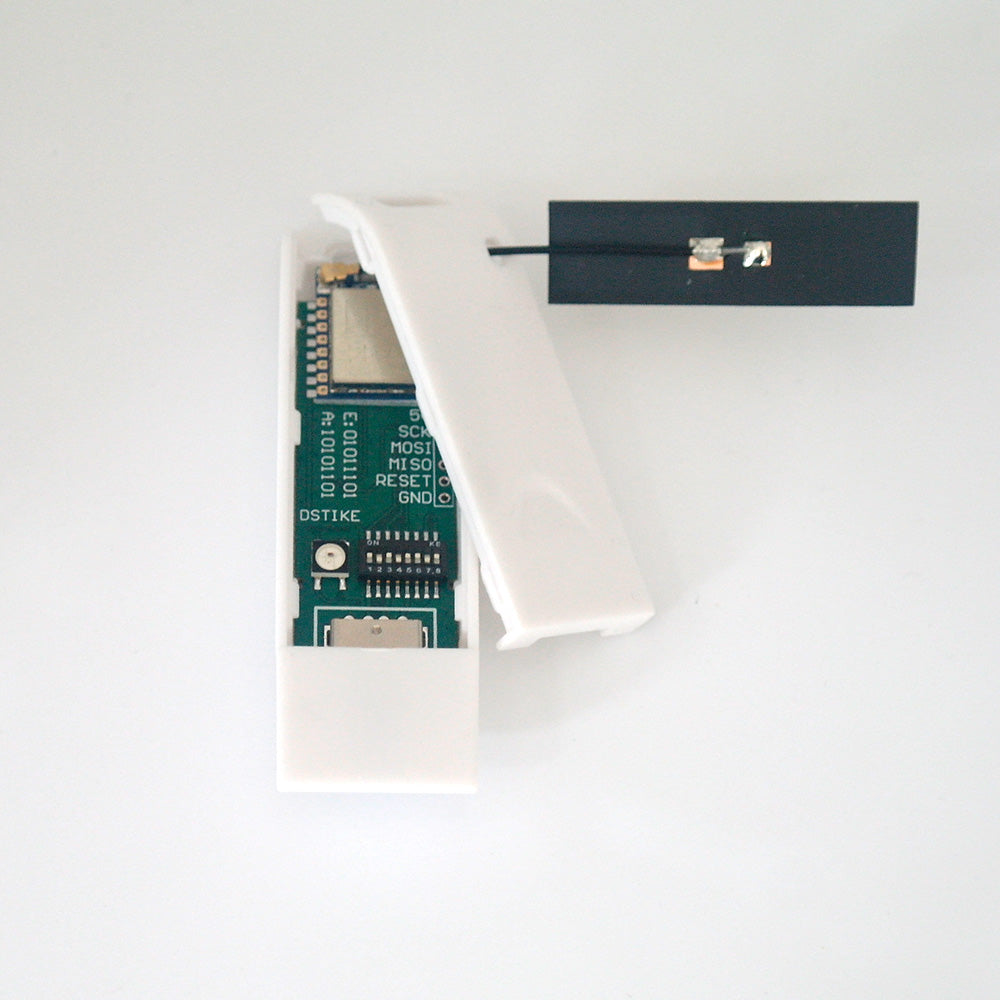
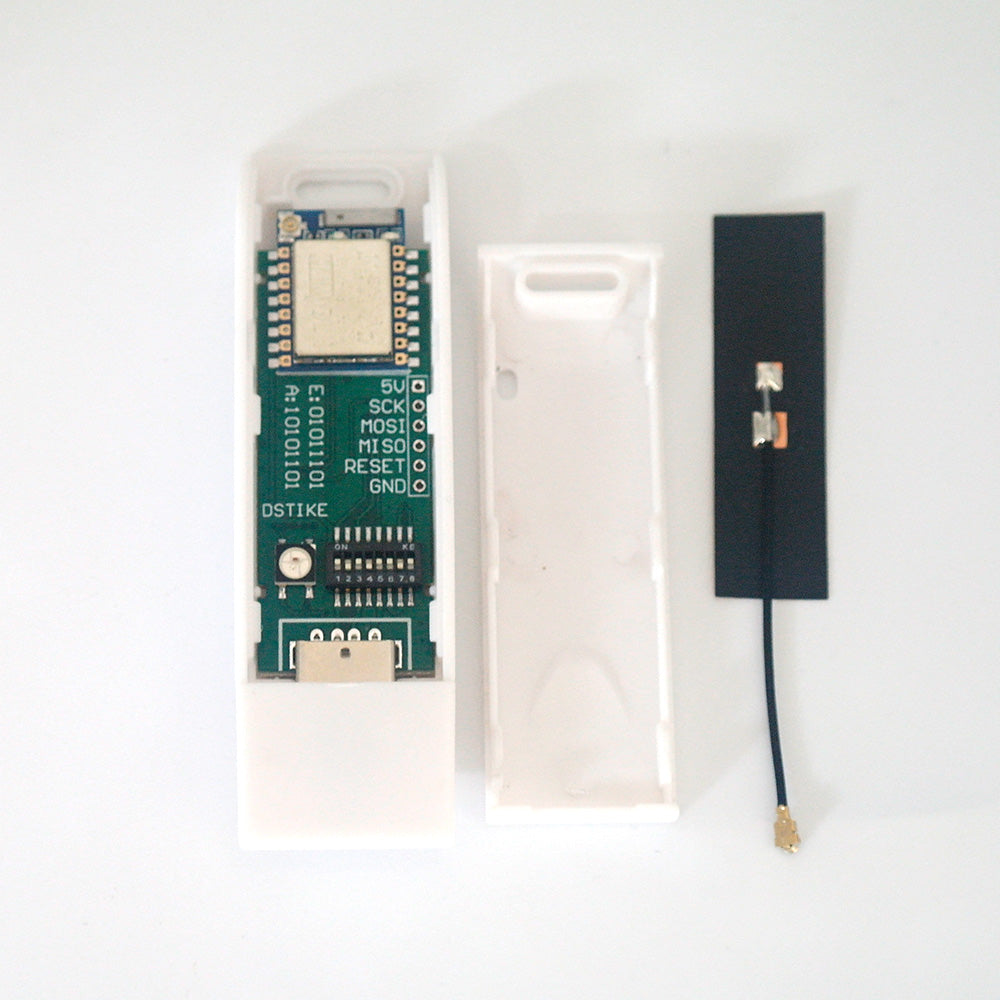
Compact protective enclosure
-
Open-source firmware and development ecosystem
Technical Specifications
-
USB controller: ATmega32U4
-
Wireless controller: ESP8266
-
Wireless frequency: 2.4GHz Wi-Fi
-
USB function: Programmable HID keyboard
-
User interface: Local browser-based interface
-
Script storage: ESP8266 internal flash
-
Status indicator: RGB LED
-
Mode selection: 8-position DIP switch
-
Firmware: Compatible WiFi Duck firmware preinstalled
-
Development support: Arduino-compatible firmware development
-
Internet connection: Not required for the local interface
System Compatibility
WiFi Duck is intended for computers and devices that accept a standard USB HID keyboard.
Actual behavior may vary depending on:
-
Operating system
-
Keyboard layout and language
-
USB port configuration
-
Script timing
-
Application response time
-
User permissions
-
Locked or logged-out system state
-
Endpoint-security software
-
USB device-control policies
-
Installed firmware version
A script that works on one computer may require different delays, keyboard-layout settings, or commands on another system.
Firmware updates may be required for compatibility with newer browsers, operating systems, or development tools.
Important Wi-Fi Notice
The ESP8266 supports 2.4GHz Wi-Fi only.
It does not support:
-
5GHz Wi-Fi
-
6GHz Wi-Fi
-
Wi-Fi 6E
-
5G cellular networks
-
SIM cards or mobile data
-
Internet-based remote control through the factory local interface
The Wi-Fi connection is intended to provide local access to the device interface. Change any default wireless password before regular use and do not leave the management interface accessible to untrusted users.
Safety Recommendations
Before running any automation script:
-
Read and understand every command
-
Test it on a non-critical computer
-
Use a non-administrator test account when possible
-
Back up important files and configurations
-
Confirm the correct keyboard layout
-
Add suitable delays for the operating system and application
-
Keep the device’s management network secured
-
Use only scripts that you created or obtained from a trusted source
Poorly written or untrusted scripts can change settings, delete information, close applications, or cause data loss.
Package Contents
-
1 × DSTIKE WiFi Duck
Responsible Use and Legal Notice
DSTIKE WiFi Duck is intended for programming education, USB HID development, workflow automation, security awareness, and authorized testing.
Use it only with computers and devices that you own or for which you have received explicit permission to test.
Connecting a programmable HID device to another person’s computer or running commands without authorization may violate privacy, computer-misuse, or cybersecurity laws. The user is responsible for understanding and complying with all applicable regulations.
DSTIKE does not authorize or encourage unauthorized command execution, data access, credential collection, system modification, or disruption.